


















LSD (lysergic acid diethylamide), DMT (dimethyltryptamine), mushrooms (psilocybin), peyote, mescaline, MDMA, salvia, phencyclidine (PCP), and ketamine; Psychedelic drugs have been in the US since their introduction in the 1950’s as a treatment for mental health, however, evidence of medicinal use dates back over 7,000 years.
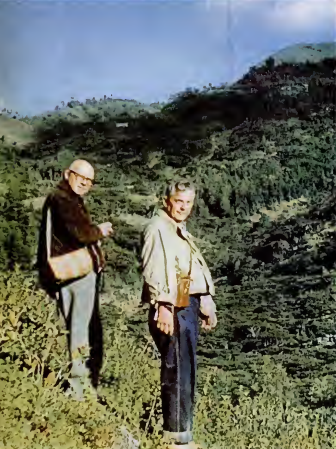
Shamanic use of mushrooms was the first hallucinogenic practice to be implemented into western medicine after US banker R. Gordon Wasson participated in a shaman-led psilocybin ceremony while visiting Oaxaca, Mexico. In his 1957 Life magazine article titled, “Seeking the Magic Mushroom,” Wasson detailed his experience taking the mushrooms, piquing the interest of many.
“The Indians mingled Christian and pre- Christian elements in their religious practices in a way disconcerting for Christians but natural for them,” Wasson’s essay stated, “…The mushrooms were of a species with hallucinogenic powers; that is, they cause the eater to see visions. We chewed and swallowed these acrid mushrooms, saw visions, and emerged from the experience awestruck.”
Following this article, Harvard psychologist Timothy Leary took his own trip to Mexico in the summer of 1960, prompting the originally straight-edged man to conduct experiments on the therapeutic and medicinal particles of peyote and mushrooms.
When Leary returned, he founded the Harvard Psilocybin Project, recruiting figures like Allen Ginsberg, a poet who believed that psychedelics could be used as a possible catalyst into an era of community and interconnectedness.
Ginsberg first tried LSD in a 1959 Stanford research study that was unknowingly funded by the CIA’S MKULTRA Project. MKULTRA was a top-secret CIA program created with hopes to develop methods for brainwashing and mind control during the cold war.
Graduate student Ken Kesey volunteered for the 1959 study at Menlo Park Veterans Hospital and was paid $75 to ingest LSD, mushrooms, peyote, and mescaline. He wouldn’t find out until 20 years later who the project was funded by.
These studies would influence the late 60s to early 70s psychedelia movement, in which young American hippies protested the ‘materialistic and military centered’ ways of society.
The mind altering substance was popularized as it encouraged them to question authority, with many rejecting the draft. As the public was actively opening their minds to the sufferings and brutalities caused by their government in the Vietnam War, the government was making decisions on how to stop this progression.
On October 27th 1970, President Richard Nixon’s legislation classifying marijuana and psychedelics as Schedule 1 took full effect. The hallucinogenic drugs included were LSD, mushrooms, peyote, DMT, DET (Diethyltryptamine), Bufotenine, Ibogaine, STP / DOM (4-methyl-2,5-dimethoxyamphetamine). This allowed them to target and arrest activist leaders who promoted them.
In a 1994 interview with Harper’s, conducted by Don Baum, Nixon’s domestic policy chief John Ehrlichman would admit that his administration’s war on drugs was motivated by a desire to silence the ‘antiwar left’ and the black community.
“[B]y getting the public to associate the hippies with marijuana and the blacks with heroin, criminalizing both heavily could disrupt those communities,” Ehrlichman stated, “Did we know we were lying about the drugs? Of course we did.”
As of May 2026, most psychedelics are still labeled as Schedule 1 substances. However, last month an executive order directing federal agencies to ease restrictions, increase research and invent safe ways for access to psychedelics in cases of mental health, mainly for veterans, fully began.
Modern research and the mentalities of citizens in 2026 have helped America come around to the idea of medicinal and therapeutic use of psychedelics, following hundreds of indigenous tribes who were already confident of their benefits.
https://www.ncbi.nlm.nih.gov/books/NBK587225/
https://www.cuttersguide.com/pdf/Periodical-Publications/life-by-time-inc-published-may-13-1957.pdf
https://harpers.org/archive/2016/04/legalize-it-all/
https://www.history.com/articles/history-of-mk-ultra