

















Want to collect fossils but have no idea where to start? This article will show you the many types of fossils that you can collect, along with explaining what characteristics of fossils make them expensive, where you can buy fossils, and what to watch out for when collecting! As a disclaimer, all this information comes from my experience from buying fossils and some of this information may vary based on where you live.
What Can I Collect?
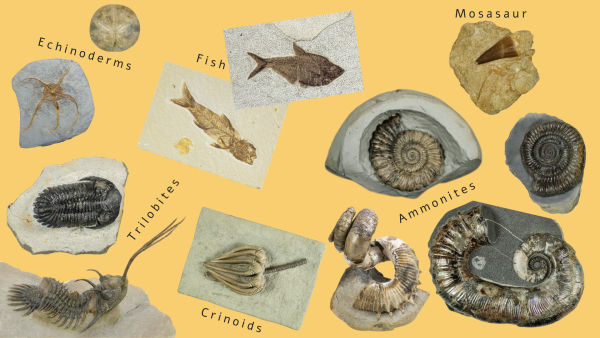
There are many types of fossils that you can collect such as marine life, with some examples being trilobite fossils, which range from a multitude of species with their own characteristics, and ammonite fossils, which are known for their unique spiral shell and iridescence.
You can also collect dinosaur fossils, which can range from bone fragments from large therapods like the famous Tyrannosaurus, teeth, vertebras, coprolite, and bone sections. You can collect other types of fossils from certain eras such as Permian aged fossils which are made up of mostly reptiles, and Paleocene fossils which can range from reptiles, birds, and early mammals.

Now of course there are many other fossils that have not been mentioned yet such as plant fossils and petrified wood, echinoderms such as starfish, urchins, and crinoids. You can also collect fossils with unique characteristics, such as fossils with iridescent colors, which can give them a colorful shine to them and pyritized fossils, which can give some fossils a golden shine or a red orange like color.
What Makes a Fossil Expensive?
Collecting fossils can be an expensive hobby to do, especially due to certain factors such as rarity of species, fossil type, uniqueness, quality, and many other factors. There are three main factors from my experience that contribute to the prices of fossils:

Quality/Preservation
This factor is one of the main tributing factors when it comes to the prices of fossils. Higher the quality of preservation of the fossil, the more expensive it will be, compared to a poorly preserved fossil.

Rarity of Species
This factor is self-explanatory, while also being one of the main factors of fossil pricing. Not all species are common, which makes species that are rare, expensive. An example of a common and cheap fossil being Mosasaur teeth, which are very commonly found around places like Morocco and similarly to sharks, Mosasaurus also constantly shed their teeth throughout their life, which makes them abundant.
Fossil Characteristics
The final factor when it comes to fossil pricing, especially since not all fossils are preserved the same which can make some fossils more unique than others. Some examples being fossils that have been replaced by unique minerals, like pyrite for example, which can give them a unique color such as red or orange due to the oxidation of iron in the pyrite. Another example being the iridescence of fossils, which can give them a shiny and colorful shine to them and depending on how much light has affected during the fossilization, like with ammonite fossils for example, can form a rainbow-like shine to them, also known as Ammolite.
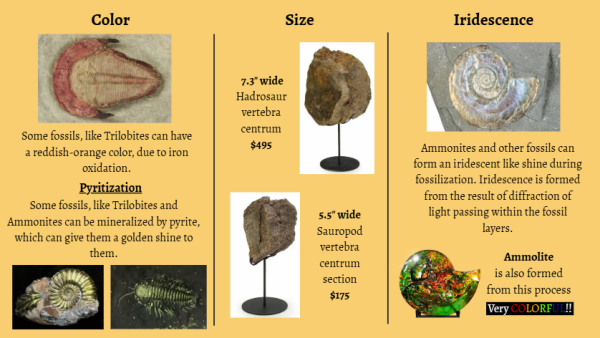
Other characteristic can also be the size of the fossil, especially bone sections or bone fragments, which can make a common fossil or a poorly preserved fossil expensive.
Where Can you Find Fossils?
Fossils can be found pretty much anywhere, if the area has geological history of prehistoric life. A great way to see if you can find fossils in your area is by researching your area’s geological history to see if there are any fossils in your area. Researching areas where you could possibly go fossil hunting is also useful, as it can help you pinpoint a search area and increase your chances of finding fossils. Some places where you could find fossils would be beaches (if allowed by your area), Highways that cut through mountains and have visible rock, and dedicated fossil quarries.

Now of course not everybody can go fossil hunting, as not all places have geological history or it’s straight up illegal to collect fossils in some areas, so rather than going fossil hunting, there are many stores and websites that sell fossils. There are a handful of stores that you can go to, which there are three types of stores that you can go to: gem/mineral Shops, curiosity shops, and dedicated fossil shops (not the fashion brand).
Gem/Mineral Shops
From my experience mineral shops usually don’t sell fossils, however, depending on the store, they usually have a handful of common fossils. I also find them more trustworthy compared to curiosity shops when it comes to authenticity of the fossils due to some shops being certified/trusted sellers who are already familiar with minerals and fossils.
Curiosity Shops
Curiosity shops are kind of a gamble when it comes to fossils from my experience, since either they do sell fossils, but have a very small selection, or they do sell fossils with a decent selection, but mixed with some not authentic fossils. Overall, curiosity shops are a decent place to go, if you’re looking for something else besides fossils.
Dedicated Fossil Shops
Out of the two mentioned, dedicated fossil shops are the best type of store to go to, especially if you’re looking to buy a handful of fossils or a certain species. Fossil shops are also the most trustworthy out of the two shop types mentioned, some shops being certified/trusted sellers when it comes to fossils. The only downside to fossil shops is that they are rare to come across compared to curiosity shops and mineral/gem shops, with some shops being in very select locations.
Websites
There are a handful of websites that you can buy from such as eBay or any other seller-based websites, however some sellers on those sites may not be trustworthy when it comes to authenticity of fossils they sell, which there are two fossil dedicated websites below that I find great to buy from:
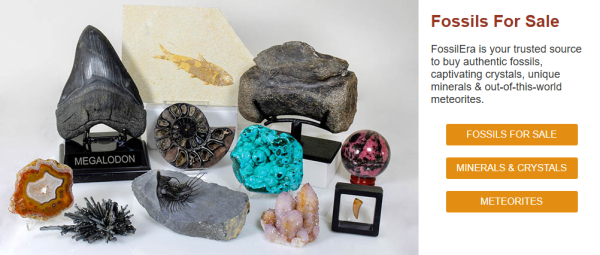
Fossilera: One of the largest online retailers that sell a wide variety of authentic fossils and minerals. Fossilera from my experience is a great website to buy from having a huge selection of fossils, ranging from ammonites, trilobites, dinosaur fossils, and high-end fossils.
Prehistoric Fossils: Similarly to Fossilera, Prehistoric Fossils sells a wide variety of fossils, minerals, and artifacts. From my experience, Prehistoric Fossils is a good place to go in person and online to buy from, having a great selection of fossils and minerals, ranging from dinosaur teeth, trilobites, ammonites, and invertebrates.
What should I look out for?
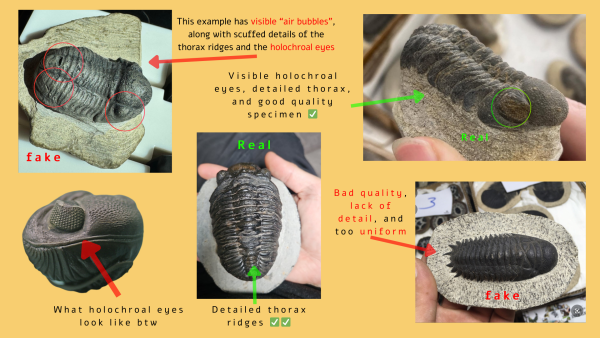
When buying fossils in-person or online, it is important to know if the fossil you’ve been eyeing, is authentic, especially if the fossil looks too good to be true. Down below will show you some key details that can help you identify authenticity of certain fossils like trilobites, ammonites, and other types of fossils that you should look carefully at:

Trilobites aren’t the only type of fossils that can be faked, which here are more key details you should look out for:

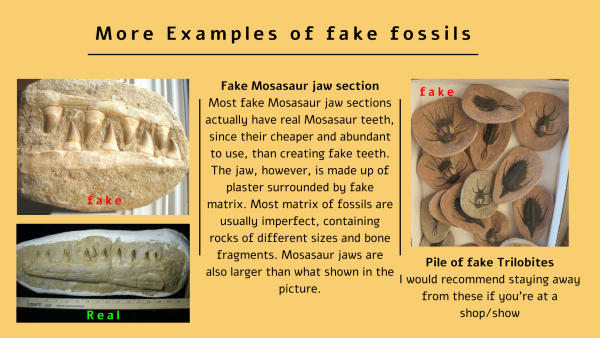
Last thing to look for when identifying the authenticity of a fossil is their price, as some fakes will have a too good of a price to pass, which of course this doesn’t always apply to all fake fossils, but it is one thing to pay attention to, besides key details. Overall, these are some key details and things to remember when collecting fossils as collecting fossils can be an expensive and somewhat of a confusing hobby if you don’t know what to look for, and where to start.